See a HaemoSync report.
Download it and check it yourself.

An anonymised example of the report HaemoSync generates: every result shown with the patient’s previous results, and interpreted in the context of why the test was done. Read it against your own standards before you decide.

Anonymised example: patient name, sample ID, test date and the originating clinic’s branding removed. Not clinical advice.

Results that show where they have come from

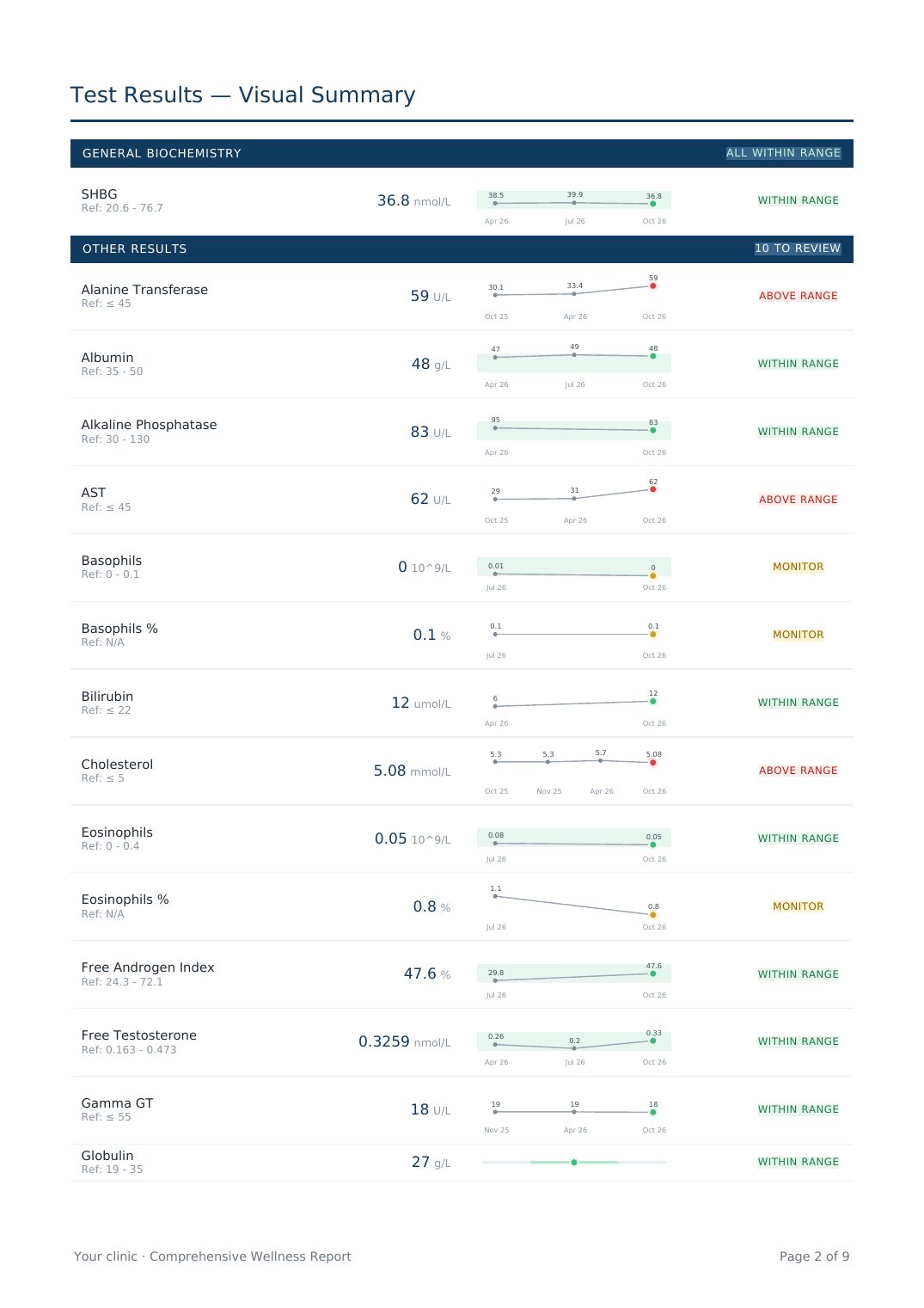
Each result sits beside the patient’s previous results, and the findings are explained against that history and the clinical context for the test. Select a page to open the full report.
Three things worth testing

Every report is written for a healthcare professional to review. Here is how we suggest you judge it.

1. Check the data

Every result, unit and reference range is listed in the results table, so you can compare it line by line with the laboratory’s own report.

2. Check the history and context

Each result is shown with the patient’s previous results, so you can see whether a value is new, rising, falling or stable, and whether the commentary reflects the clinical context for the test.

3. Check the reasoning and follow-up

Each abnormal or borderline finding is explained in writing, with recommendations, retest intervals and a follow-up plan, so a clinician can agree, amend or reject them.

The structure, section by section

The content is generated from the results supplied, the patient’s previous results and the clinical context for the test, so it changes with the patient. The layout stays the same.

  1. 1
    Clinic branding, patient details and the overall picture
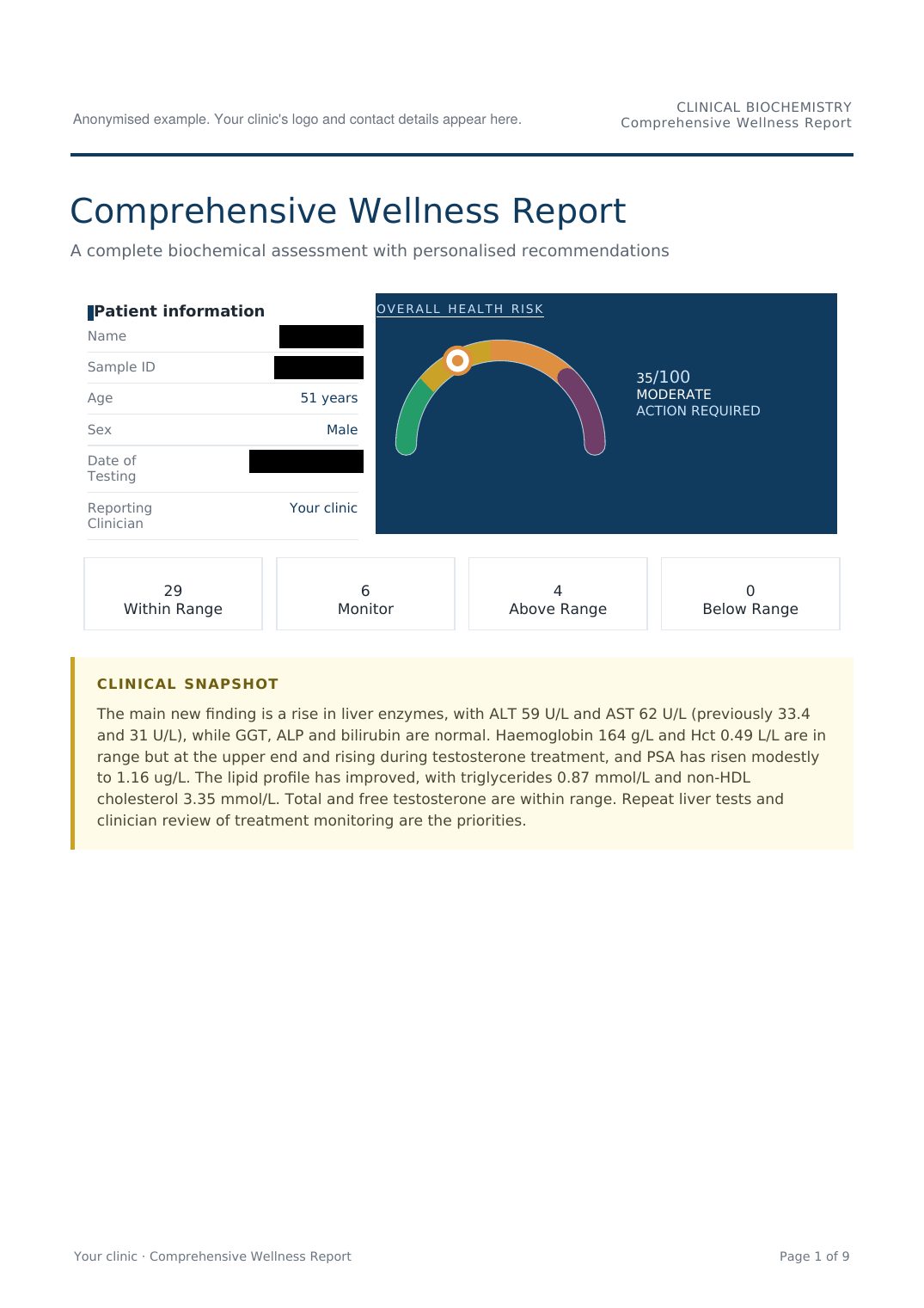
    Your clinic’s logo and contact details sit at the top, followed by the patient details, an overall risk indicator and counts of results within range, to monitor and above range.
  2. 2
    Clinical snapshot
    A short summary of what is new since the previous results, written with the clinical context for the test in mind.
  3. 3
    Visual summary with trends
    Every biomarker in one view: result, unit, reference range, status and a trend line drawn from the patient’s previous results.
  4. 4
    Clinical findings
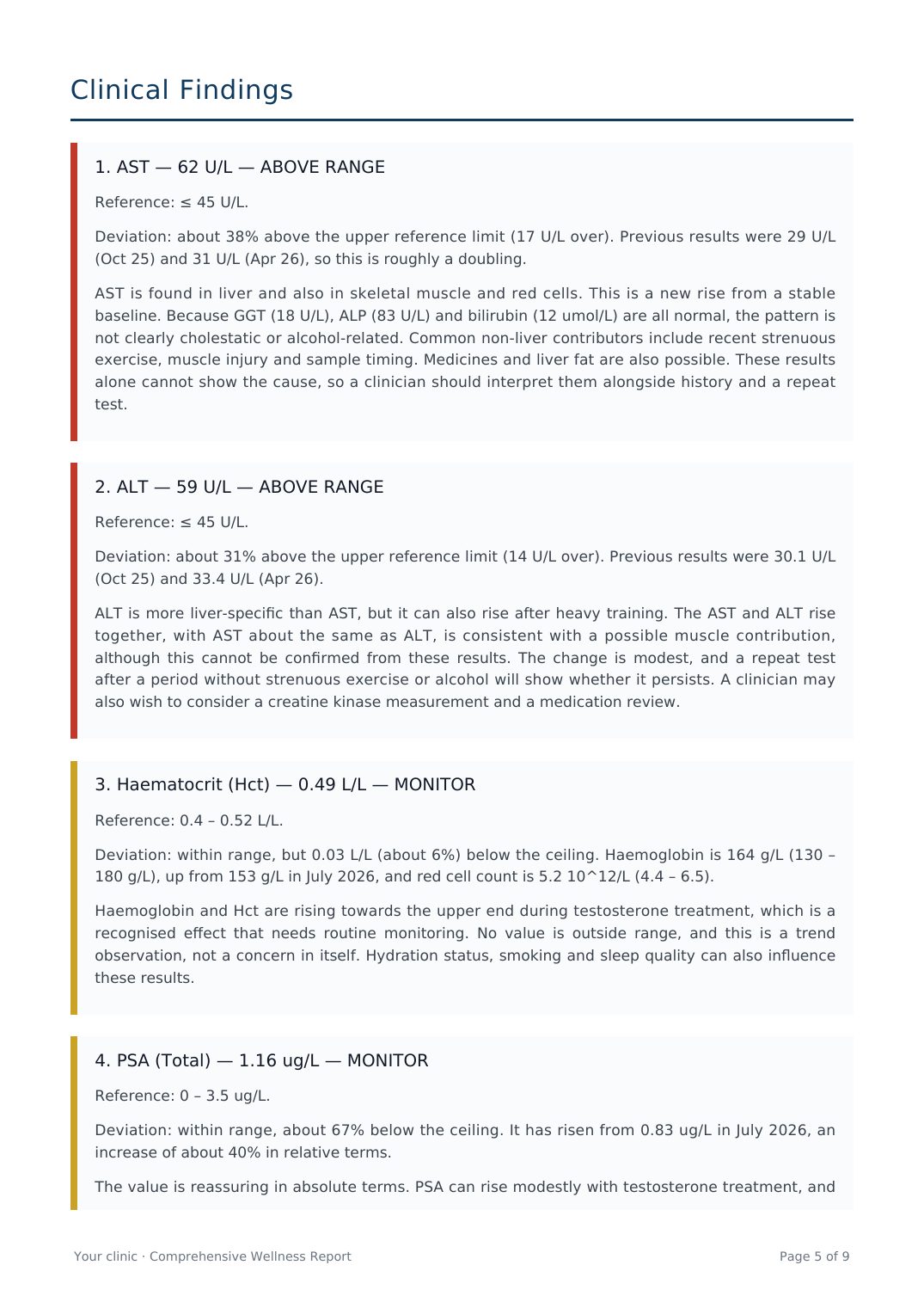
    Each abnormal or borderline result with its reference range, how far it sits from it, the previous results, and factors the clinician may wish to consider.
  5. 5
    Clinical commentary
    Normal results grouped by area, the themes behind the abnormal results, and the limits of the panel, including what was not tested.
  6. 6
    Recommendations and action plan
    Suggested clinical actions, lifestyle changes and surveillance reminders linked to the findings.
  7. 7
    Monitoring and follow-up
    A retest schedule showing what to repeat, when and why, with a staged follow-up plan for the clinician to adopt or amend.
  8. 8
    Overall risk assessment
    An overall summary with area-by-area notes drawn from the results.
  9. 9
    Important notice
    States that the report is informational and should be reviewed with a healthcare professional.

The example report

Your browser can’t show the PDF here. Download the example report instead.

This example was generated by HaemoSync from a set of blood test results, the patient’s previous results and the clinical context for the test. The patient’s name, sample ID, test date and the originating clinic’s branding have been removed. HaemoSync is a clinical decision support tool for qualified healthcare professionals and does not replace clinical judgement.

See HaemoSync in action.

Book a live demonstration and see how ordering, reporting and Cliniko filing work together.

Book a Demo